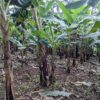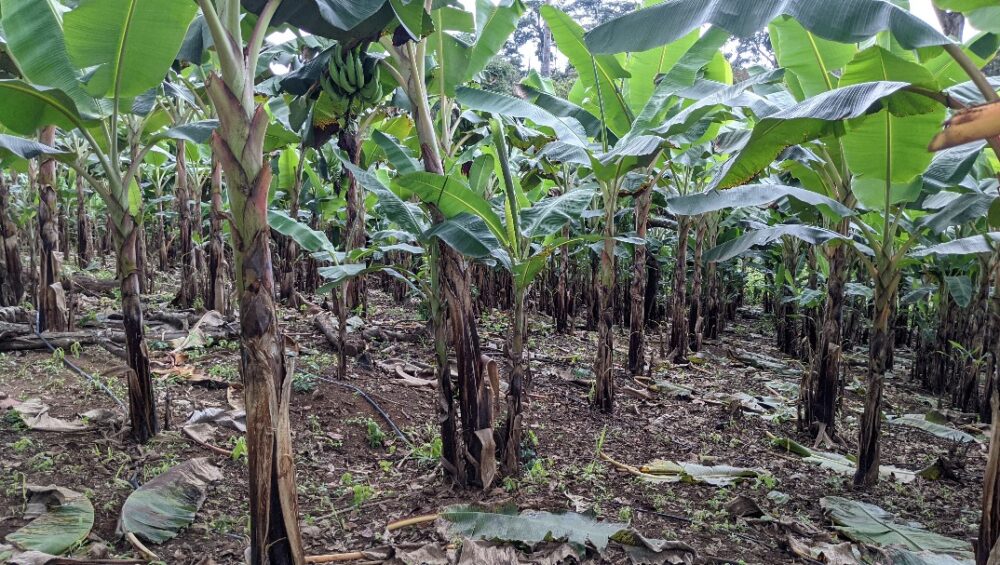
Plantain is more than just a crop—it is a staple food, a source of income, and a pillar of food security for many households in Cameroon. In the Southwest Region, plantain farming supports thousands of families and contributes significantly to local economies. However, unsustainable farming practices, environmental degradation, and climate change increasingly threaten plantain production. This is why sustainable plantain farming is essential for both present and future generations.
What Is Sustainable Plantain Farming?
Sustainable plantain farming is an agricultural approach that balances productivity with environmental protection. It focuses on producing healthy yields while preserving soil fertility, conserving water, protecting biodiversity, and minimizing harm to the ecosystem. Rather than exhausting the land, sustainable practices ensure that farmland remains productive year after year.
This approach recognizes that long-term food security depends not only on increasing output but also on maintaining the natural resources that make farming possible.
Why Plantain Matters for Food Security
Plantains are a major staple food in Cameroon, consumed daily in many households. They provide essential nutrients, are affordable, and can be prepared in many forms. For smallholder farmers, plantain farming is also a reliable source of income.
As populations grow and food demand increases, ensuring a steady supply of plantains becomes increasingly important. Sustainable plantain farming helps stabilize production, reduce the risk of crop failure, and protect communities from food shortages.
Key Sustainable Farming Practices
Sustainable plantain farming involves a range of environmentally friendly and climate-smart practices, including:
- Soil conservation: Using organic manure, mulching, and crop rotation to maintain soil fertility and prevent erosion.
- Responsible land use: Avoiding deforestation and overuse of land to protect ecosystems and biodiversity.
- Water management: Protecting water sources and using efficient irrigation methods where necessary.
- Integrated pest management: Reducing reliance on harmful chemicals by using natural pest control methods.
- Climate-resilient techniques: Adapting farming methods to changing weather patterns and unpredictable rainfall.
These practices not only protect the environment but also improve crop resilience and long-term productivity.
Empowering Farmers Through Knowledge
A critical part of sustainable plantain farming is farmer education. Many smallholder farmers face challenges due to limited access to training, resources, and modern agricultural knowledge. By providing training, demonstrations, and continuous support, farmers learn how to improve yields without degrading their land.
When farmers understand sustainable techniques, they gain greater control over their livelihoods, reduce production risks, and increase household income.
Environmental Benefits
Sustainable plantain farming plays a vital role in environmental protection. Healthy soils absorb more water and carbon, helping to reduce the effects of climate change. Reduced chemical use protects nearby water sources, wildlife, and human health. By preserving farmland and surrounding ecosystems, communities contribute to broader climate change mitigation and adaptation efforts.
Building Community Resilience
Beyond farming, sustainable plantain production strengthens entire communities. Increased yields and stable income improve living standards, support education, and enhance food availability at the local level. Communities that farm sustainably are better equipped to withstand climate shocks, market fluctuations, and environmental challenges.
Looking to the Future
Sustainable plantain farming is not just an agricultural practice—it is an investment in people, the environment, and long-term food security. By integrating environmental stewardship with economic productivity, communities can meet today’s needs while safeguarding resources for future generations.
At Obasi Arreh Community Common Interest Group (OAC), sustainable plantain farming remains central to our mission. Through responsible agriculture, community training, and environmental protection, we continue to work toward a future where food security and a healthy environment go hand in hand.