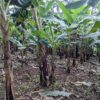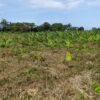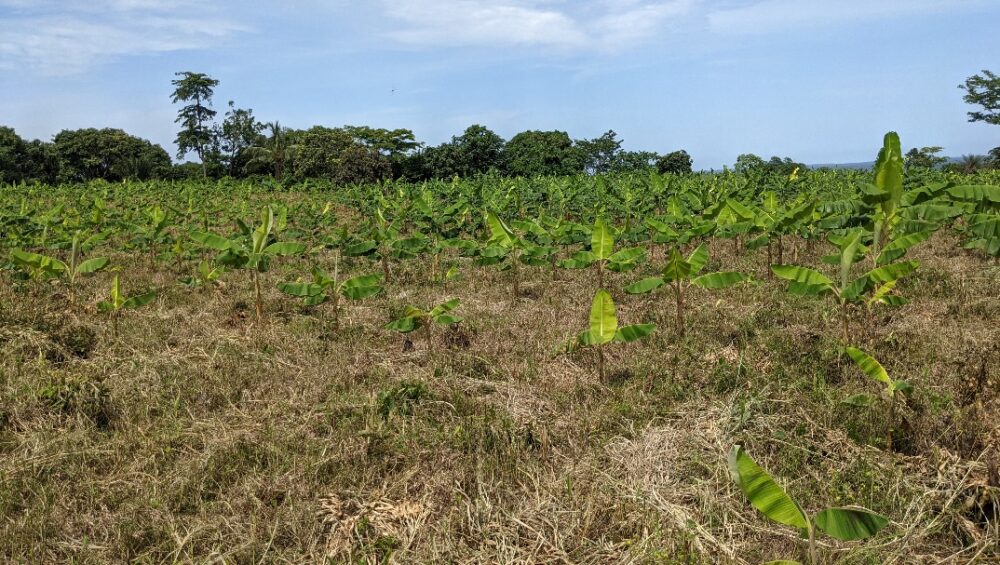
Across the Southwest Region of Cameroon, plantain farming plays a vital role in daily nutrition and household income. For many families, plantain is not only a staple food but also a dependable source of livelihood. As environmental pressures and climate change increase, adopting sustainable plantain farming practices has become essential to protecting both food security and the environment.
The Challenge Facing Plantain Farmers
Smallholder farmers today face multiple challenges, including declining soil fertility, unpredictable rainfall, pest outbreaks, and environmental degradation. Traditional farming methods, when practiced without sustainability in mind, can exhaust the land and reduce long-term productivity. These challenges make it difficult for farmers to maintain consistent yields and stable incomes.
Sustainable plantain farming offers practical solutions to these growing problems.
Sustainable Practices That Make a Difference
Sustainable plantain farming focuses on working with nature rather than against it. Key practices include improving soil health through organic inputs, mulching, and proper spacing of crops. These methods help retain moisture, reduce erosion, and enhance nutrient availability.
Farmers are also encouraged to protect surrounding forests and water sources, recognizing that healthy ecosystems directly support agricultural productivity. Reduced use of harmful chemicals further protects the environment and promotes safer food production.
Adapting to Climate Change
Climate change has introduced new uncertainties for farmers, including prolonged dry seasons and intense rainfall. Sustainable plantain farming promotes climate-smart techniques that help crops withstand these conditions. By selecting resilient planting methods and improving water management, farmers can reduce crop losses and increase their ability to adapt to changing weather patterns.
Improving Livelihoods and Local Economies
When farmers adopt sustainable practices, the benefits extend beyond the farm. Increased yields and better-quality produce lead to improved household incomes. With greater financial stability, families can invest in education, healthcare, and other essential needs.
At the community level, sustainable plantain farming strengthens local food systems, reduces dependence on external food supplies, and supports economic resilience.
Environmental Protection and Long-Term Impact
Healthy farmland depends on clean soil, water, and air. Sustainable plantain farming helps protect these natural resources by minimizing pollution and encouraging responsible land use. These efforts contribute to climate change mitigation while preserving the environment for future generations.
A Sustainable Future for Food Security
Sustainable plantain farming is more than an agricultural technique—it is a long-term commitment to community wellbeing and environmental stewardship. By combining food production with ecological responsibility, communities can secure reliable harvests today while protecting the land for tomorrow.
Through continued training, awareness, and support, Obasi Arreh Community Common Interest Group (OAC) remains dedicated to promoting sustainable plantain farming as a foundation for resilient communities and lasting food security.